What I Can Share
I cannot publish client names, product names, screenshots, or implementation details from this work. This case study focuses on the problems I worked on and how I approached them.
The Problem
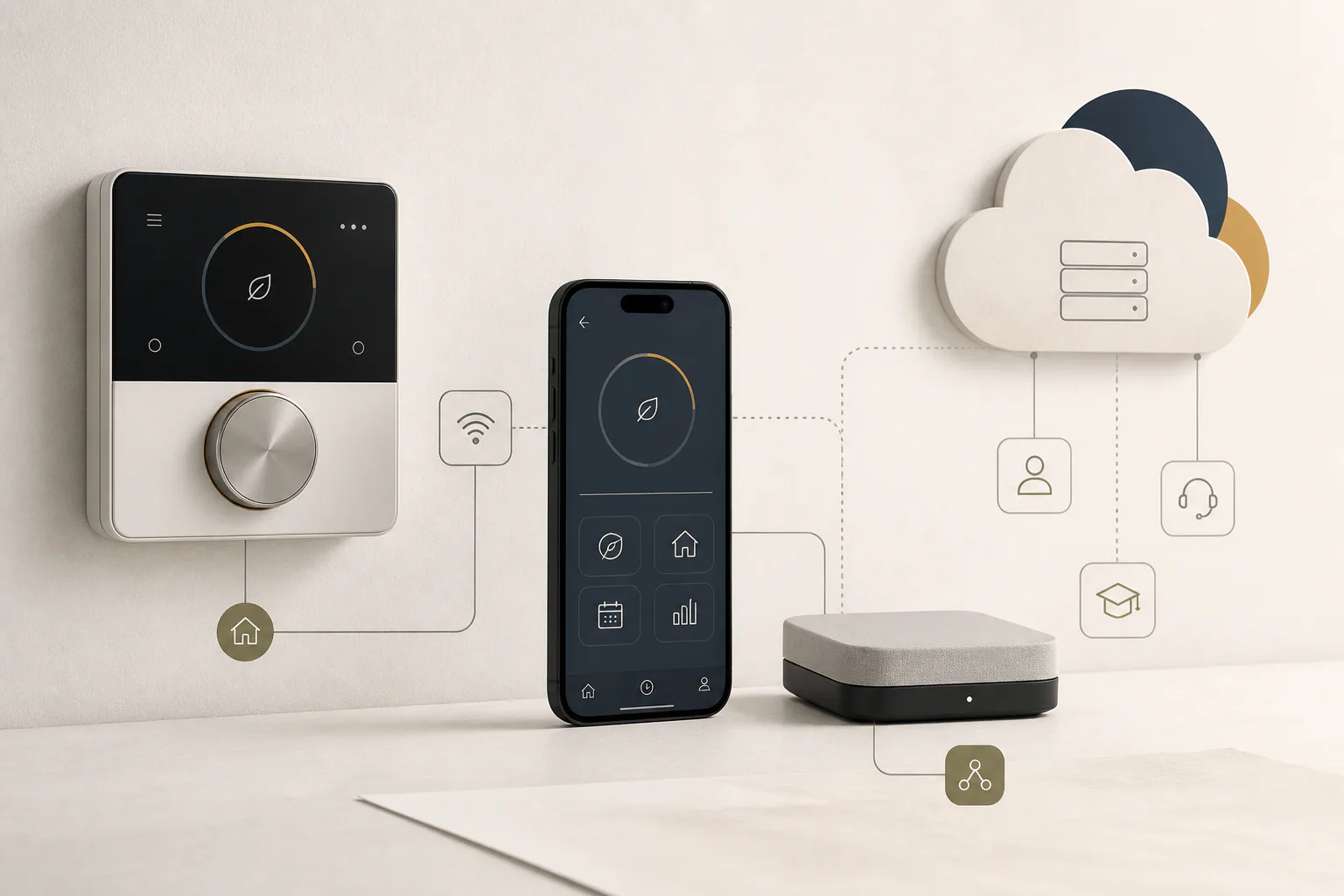
Customers experience the controller, app, cloud service, and support journey as one product. Internally, those parts are often owned by different teams. A small gap between them can leave a user stuck during setup or make a support issue much harder to solve.
My Role
My job is to turn those gaps into decisions: what each system should do, who owns the handoff, and what happens when setup fails. I work with engineering, design, QA, support, and business teams to keep that behavior consistent.
What I Produce
- Product requirements that cover device, app, cloud, and support behavior.
- Setup journeys with clear failure and recovery paths.
- Service maps showing ownership and dependencies.
- Support scenarios and acceptance criteria.
- Release scope with explicit trade-offs and a clear definition of what is ready.
What Matters Most
Users do not need to understand the whole stack. They do need to know what state the product is in, what to do next, and how to recover.
Back to all work