Why I Built It
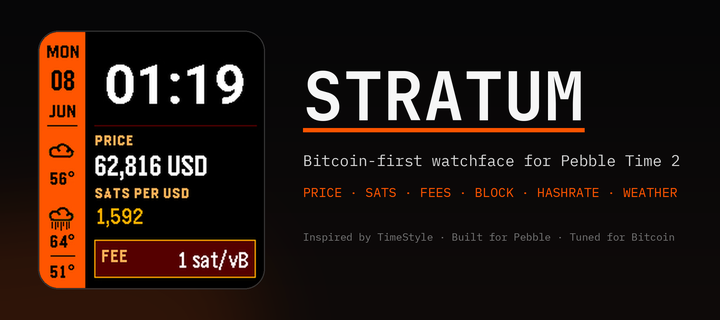
I liked the information density and personality of classic Pebble watchfaces. Stratum applies that approach to the data I check regularly.
The goal was to make those signals available at a glance without turning the watch into another feed.
What It Shows
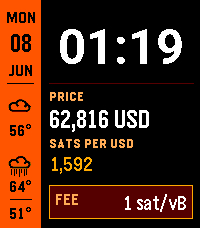
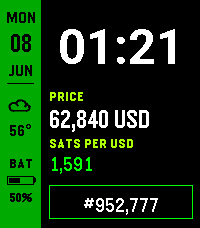
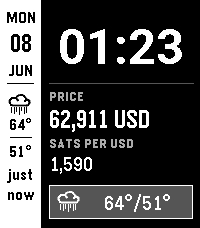
- BTC price in USD, EUR, GBP, JPY, or CAD.
- Sats per fiat unit and fee rate in sat/vB.
- Weather, forecast, battery, and phone disconnect status.
- Block height, hashrate, difficulty, and last update age.
Visual System
The date rail, time, Bitcoin data, and smaller live signals each have a fixed area. Themes range from high-contrast terminal colors to a warmer whitepaper style.
Configurable Data
The settings page covers themes, data, layout, and APIs. People can choose a currency, price provider, refresh interval, number format, weather units, lower panel, and sidebar content.
APIs
- BTC price: CoinGecko, Coinbase, Blockchain.com, or a custom JSON endpoint.
- Fees and network stats: Mempool.space by default, with custom fee endpoint support.
- Weather and forecast: Open-Meteo, using phone location or fixed coordinates.
What I Built
The watchface is written in C with PebbleKit JavaScript for external data. It supports multiple price providers, Mempool.space data, Open-Meteo weather, custom endpoints, and fallback sources.
Current Result
Stratum is available through RePebble and targets Pebble Time 2 / Emery. The reusable build and verification process behind it is documented in the Pebble Watchface Skill.